Vipassanā or Pa-Auk?
The main difference between vipassanā and Pa-Auk is one of religion. Literally meaning ‘to see things as they really are’, vipassanā is an ancient Indian, non-sectarian meditation technique supposedly rediscovered 2500 years ago by Gotama Buddha. Vipassanā retreats teach psychological purification through self-observation. Those taught in the tradition of S. N. Goenka typically last 10 days. During this time, meditators must refrain from various activities, including reading, writing, and religious practises; speaking is only permitted on the yogi’s final day. Pa-Auk, conversely, is Buddhist. Based on the Visuddhimagga, a treatise on Theravāda Buddhist doctrine written by the 5th-century Indian scholar Buddhaghoṣa, Pa-Auk meditation focuses on achieving samatha (‘tranquillity’), primarily through the practise of ānāpānassati (‘mindfulness of breathing’). While developing samatha, reading, writing and speaking are permitted; but when yogis move on to practising vipassanā (which may be years later), the rules change. The Pa-Auk method was developed by the Venerable U Āciṇṇa and named after the monastery he taught at, Pa-Auk Tawya Forest Monastery. Situated 15km south-east of Mawlamyine, the capital of Mon State, Pa-Auk Tawya Forest Monastery is the largest Pa-Auk monastery in Myanmar, currently hosting around 700 meditators – over 100 of whom are foreign monks, nuns and laypeople. It sits amid 500 acres of beautiful forest and jungle. I was fortunate enough to be able to spend a week there, though many yogis stay for six months or more.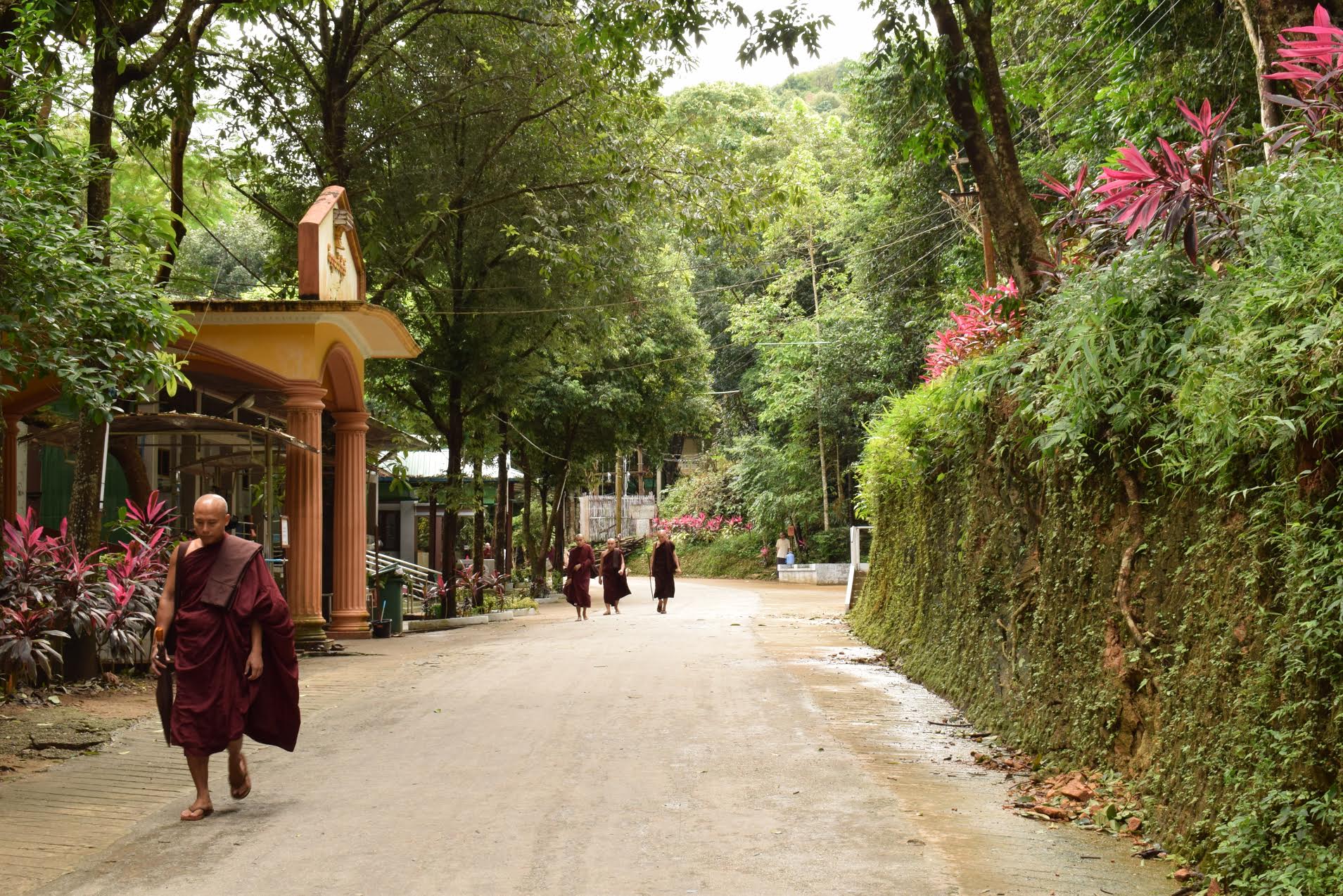
A Healthy Mind: Why I Meditate
I’ve tried numerous forms of meditation over the past few years, but have never got along with any of them. I’ve used meditation apps such as Headspace; taken classes that combine Mindfulness Meditation with yoga; my university’s psychotherapist even signed me onto a Compassion Meditation course targeted at treating my self-deprecation. Mental health issues have always played a large and villainous role in my life. In many ways, I’m your stereotypical journalist – frenetic and rarely able to relax – but I’m also a lifelong insomniac, suffered for years from depression and more recently from stress-induced psychosomatic pain – a 3-month headache, perhaps the most unpleasant period of my life. While I am neither religious nor especially spiritual, I do believe in the healthiness of a calm, clear mind and have sought to realize this through meditation. My intention for the week was to connect with Pa-Auk meditation. Failure to do so would probably see me give up meditation once and for all. So it was with anticipation, and a slight sense of dread, that I hopped off the bus and passed beneath the green and gold archway of Pa-Auk Tawya.My Time at the Monastery
Orientation and a Lesson in Meditation
I was driven to the Foreigners Registration Office at the Upper Monastery, where U Kumuda, the monk in charge of registering foreigners, introduced me to daily life at Pa-Auk Tawya. I was to stay in a kuṭi, a kind of hermitage hut, and would have to abide by the following Eight Precepts of Buddhism:- To refrain from killing living creatures
- To refrain from stealing
- To refrain from sexual activity
- To refrain from incorrect speech (such as lying)
- To refrain from taking intoxicating drugs
- To refrain from eating after noon
- To refrain from dancing, singing, music, using perfumes, and beautifying the body with cosmetics
- To refrain from sleeping on cushioned beds
Day 1
My morning began with the familiar, sharp head pain I get from a poor night’s sleep, but I got myself out of bed and trudged my way up to the sīma (‘meditation hall’). Consecrated on 18th February 2000, it’s an elegant yellow and saffron building divided into two levels – the ground floor hall for the laypeople, the first floor hall for the monks. When I arrived, the monks and local laypeople were chanting Buddhist prayers, but there was only a handful of foreign laypeople. While I was assigned a spot beneath a hanging green mosquito net, and arranged my meditation cushions into a suitable seat, foreign laypeople gradually arrived – timing their arrival for the end of the chanting and start of the actual meditation. It seemed things were more relaxed than I had first imagined. The meditation sessions weren’t compulsory – you chose your own schedule, meditating as much or as little as you thought fit.Breakfast Time: Alms Collection
My concentration was largely inhibited by the sharp pain in my head that first session, but I remained still for the entire 45 minutes I was seated – which, I thought, was not a bad start. I had at least deserved my morning alms. So at 5:45, sunrise, I went to the Pindapatasala (‘alms-giving hall’) to collect my breakfast. Foreign monks are served first, followed by local monks; foreign laypeople come third and local laypeople last (but not least). You’re respectfully asked to accept only as much as you expect to eat, but it’s difficult to refuse the enormous portions of rice, curry, noodles and vegetables ladled out by the cooks. Even voracious eaters like me don’t go hungry at Pa-Auk Tawya, and the food is exquisite.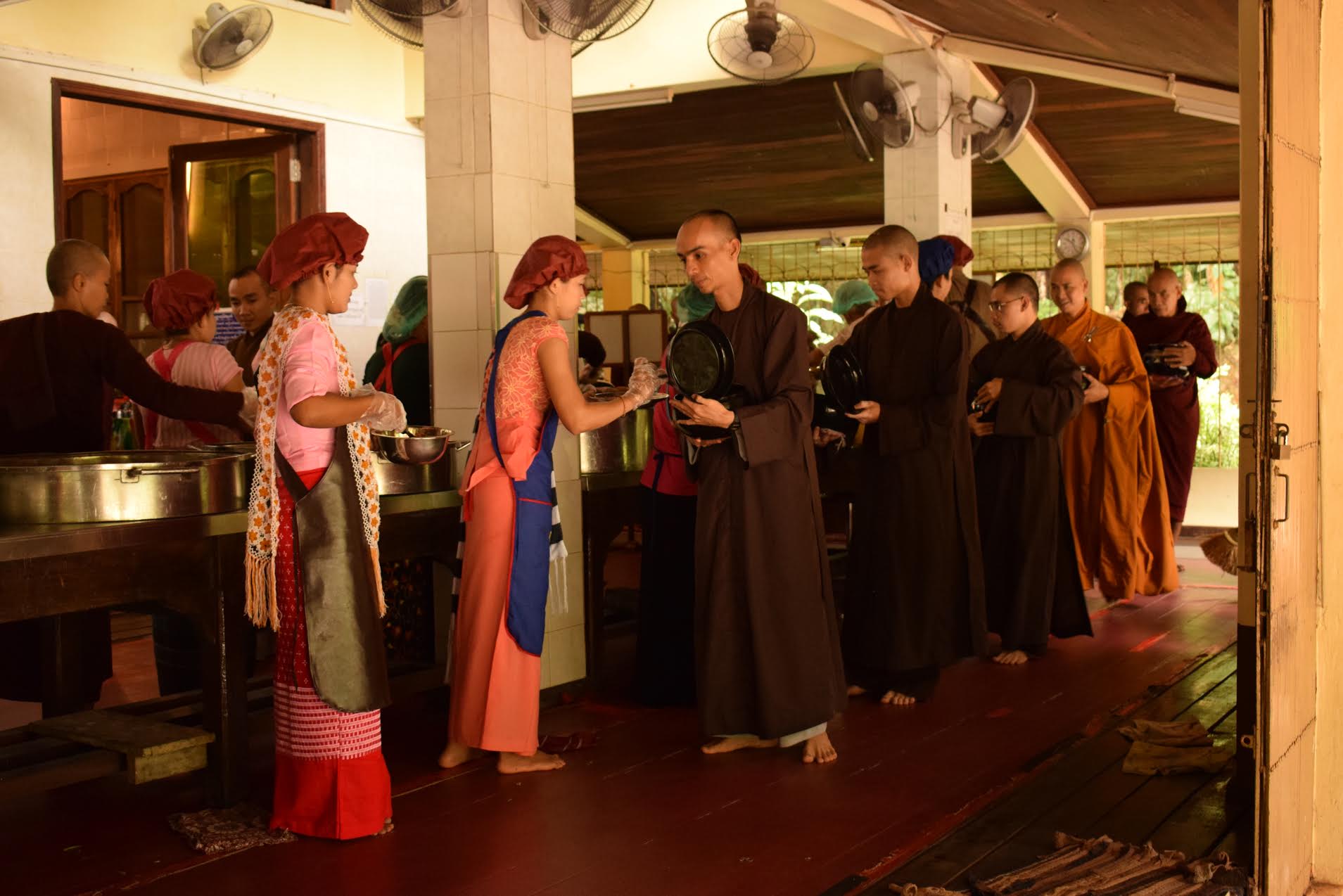
Deeper Meditation, Rubber Trees and Sunsets
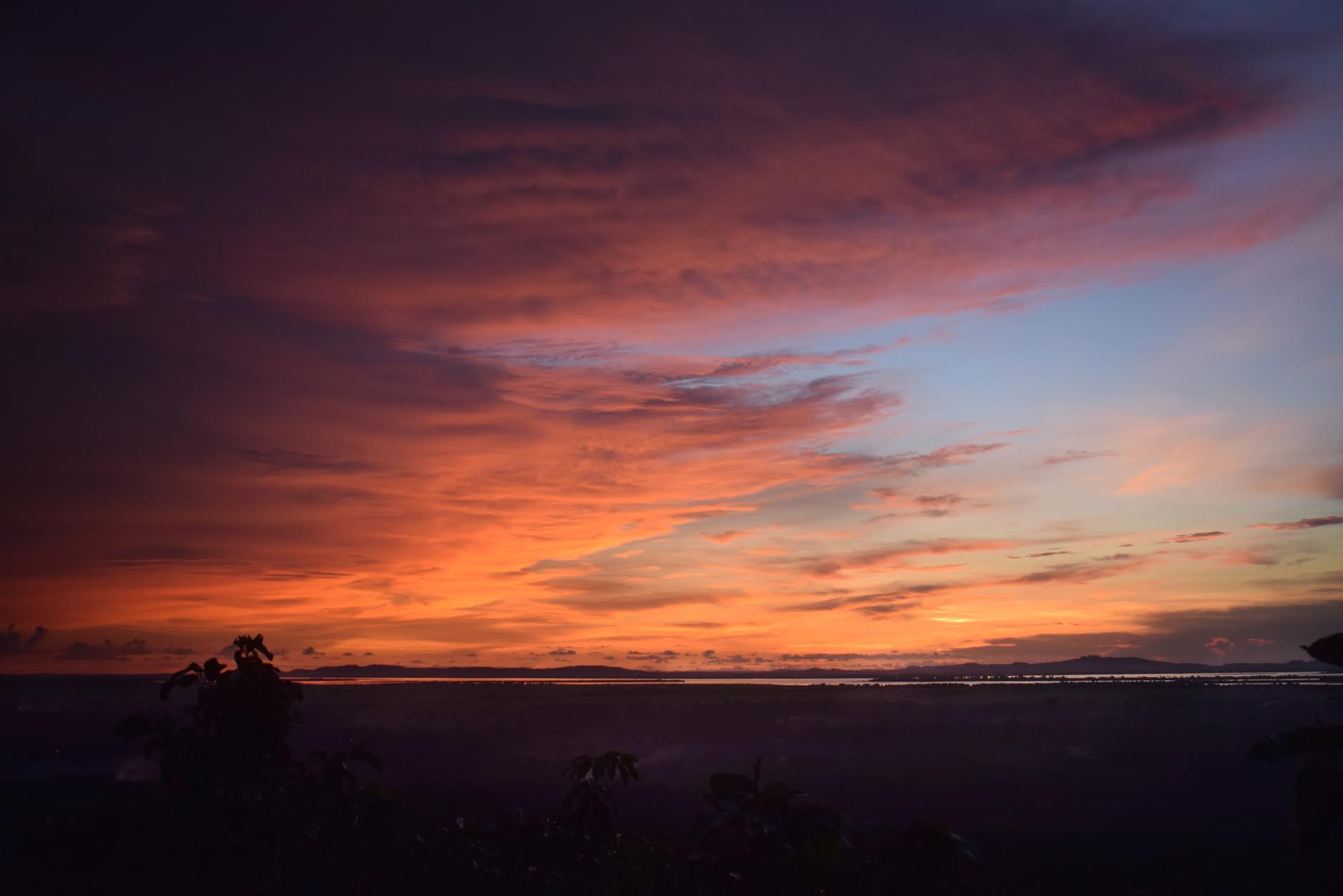
After I had cleaned my kuṭi in the 30 minutes scheduled for it after breakfast, I headed up to the sīma for the first full meditation session. Despite the sharp head pain, I was better able to focus. At least for a while, anyway. As time ticked by, my thoughts drifted here and there, and my legs began to shake. Then my entire body started quivering, unused to holding this position for so long. Yet the more I shook and quivered, the better I was able to concentrate on the Focus Point. Soon it was warm and tingling, the new centre of my body; and though my legs screamed in anguish, I kept my composure and held out until my body finally slumped. I opened my eyes. To my amazement, I was one of the few left in the hall. I slowly got to my feet, still in the curious state of physical exhaustion and meditative calm, left the sīma and looked up at the clock. I had lasted the entire 90 minutes! I followed this success up with a pleasant hour of walking meditation – barefoot to encourage mindfulness. The peaceful, meditative clarity I had achieved in the sitting session remained with me as I wandered through the tranquil forest, past rows and rows of rubber trees trickling milky white sap into coconut cups.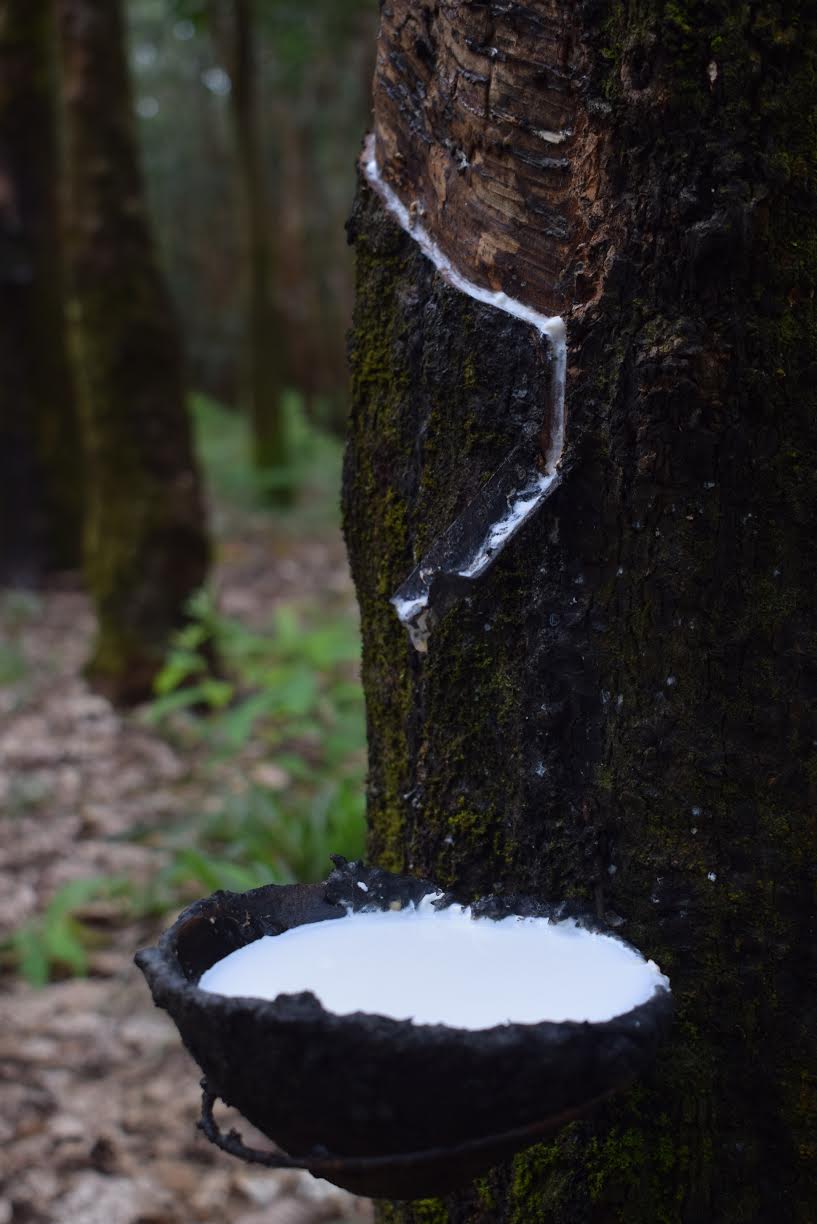 Lunch ran much like breakfast, afternoon meditation like my successful morning session. After the final session of the day, I came down from the sīma, collected a bottle of diluted tamarind juice (fruit juices mixed with cold water are permitted after midday) and walked to the top of the hill, where I enjoyed a spectacular sunset. And that’s when I began to feel that it might actually be a deeply meaningful and enjoyable week.
Days 2, 3 & 4
I slept better the next few nights, but struggled to focus in my morning meditation sessions on days 2 & 3. I needed a way of refocusing my mind when it drifted. So on Day 3 I went to my meditation teacher, a senior monk who spoke excellent English, and he taught me the following technique: “When your concentration slips, start counting your breaths – inhale, exhale, ‘1’; inhale, exhale, ‘2’ – up to 8. Then turn your attention back to the Focus Point.” I put this technique into practise for the remaining sessions that day – and was surprised how effective it was: although I didn’t stay for the full 90 minutes, I sustained my longest periods of unbroken concentration yet. In all the previous sessions, I had only managed to focus properly in the last 20 minutes or so. But this time I was able to maintain focus earlier on, so I reached a deeper state of meditation in less time. Progress!The Library
In the two hours between the second morning meditation session and lunch, I usually retired to my kuṭi to read my book. But on Day 3 I decided to pay the library a visit instead. Stocked with hundreds of books in numerous languages, including English, Chinese and Pāli (the language of the Theravāda Buddhist canon), and equipped with reading stands, the library is a tranquil environment for self-study. I routed around and picked up Mindfulness of Breathing and Four Elements Meditation by the Venerable Pa-Auk Sayadaw (literally ‘royal teacher’; the term was originally used for monks who taught the former Burmese kings). It recommended the same technique for calming a busy mind: eight breaths to remind the meditator of the Noble Eightfold Path. The first chapter also clarified what mindfulness of breathing meant, giving the example of how the meditator should be aware of whether they are inhaling and exhaling long or short breaths, without focusing too hard on them. I turned the page, reading for the first time about the nimitta (‘sign of concentration’). The nimitta, I learnt, should appear within an hour of unbroken concentration and may take a variety of forms: a thread of wool; a lotus flower; a cool breeze – to name a few. And should the nimitta move close to the Focus Point, the meditator should shift their concentration onto it. I left the library and headed to lunch speculating on why Pa-Auk meditation was working better for me than other forms had. Most of the meditation I had done in Europe focused on breathing, tracking the physical sensations of the breath as it flows in and out of the body. But that had usually led me to obsess about the breath – Is it hot or cold? How far up my nose can I feel it? How much do my nostrils flare with each inhalation? – which isn’t really meditation but analysis. Mere mindfulness of the breath, however, doesn’t encourage the emergence of such obsession; instead it opens a secondary level of meditative concentration that works in tandem with concentration on the Focus Point. At least that’s what I theorised. Lunch that day was attended by tuk-tuk loads of Thai and Chinese tourists keen to boost their karma by offering generous alms. On top of the mounds of papaya curry and tea leaf salad, they piled packets of electrolyte beverages (for the treatment of diarrhea), packs of Gillette razors and a handful of handkerchiefs. I wasn’t sure how these would aid my meditation practice, but I accepted them gratefully nonetheless.Days 5 & 6
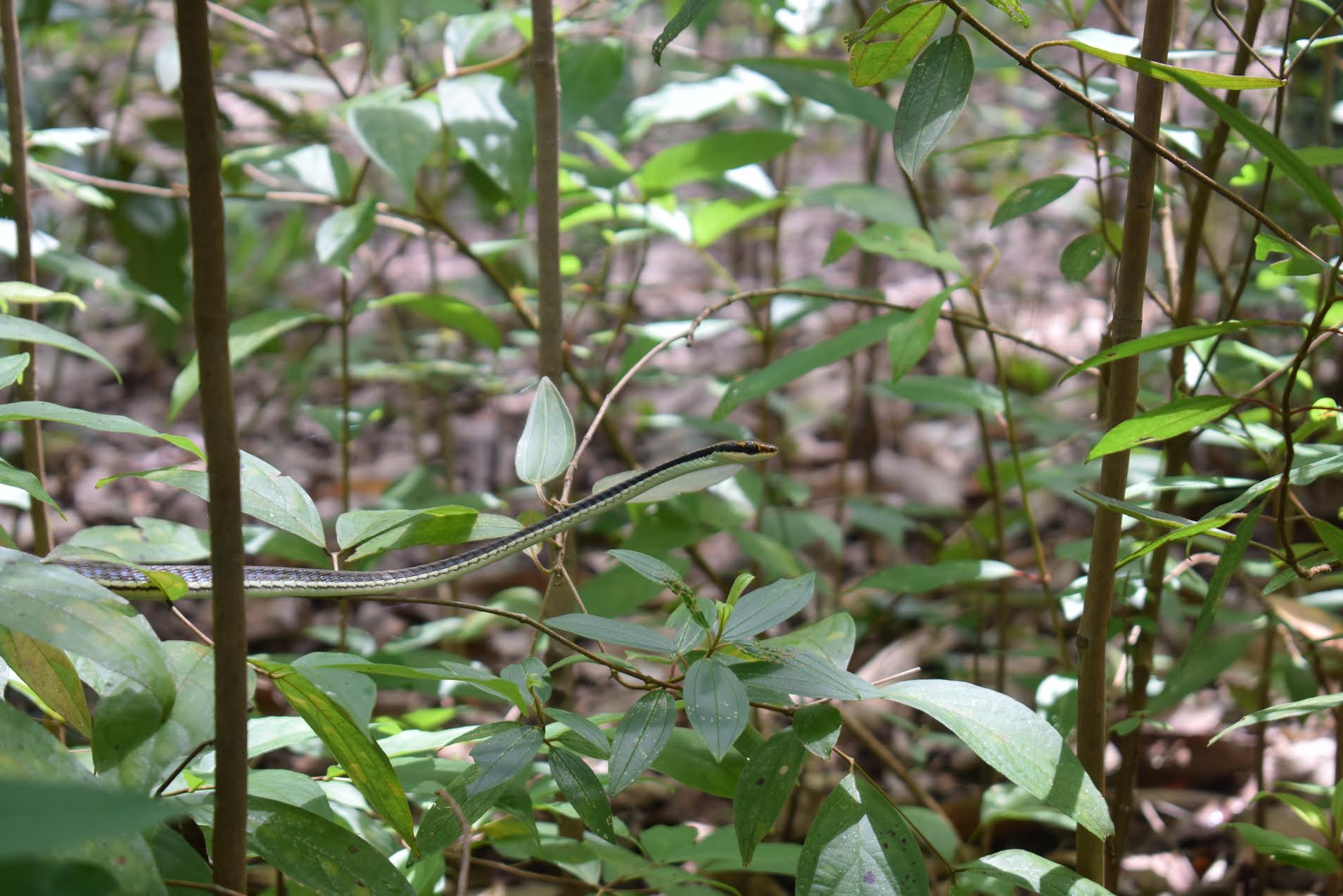
My final two days ran roughly as expected: in my sitting sessions, I got gradually better at maintaining focus, while my walking meditation continued to bring me joy. On one occasion, I was lucky enough to stumble (almost literally) upon this beautiful snake. My meditative concentration broke, so I indulged instead in a rewarding – and possibly dangerous – game of Hide-and-Seek.